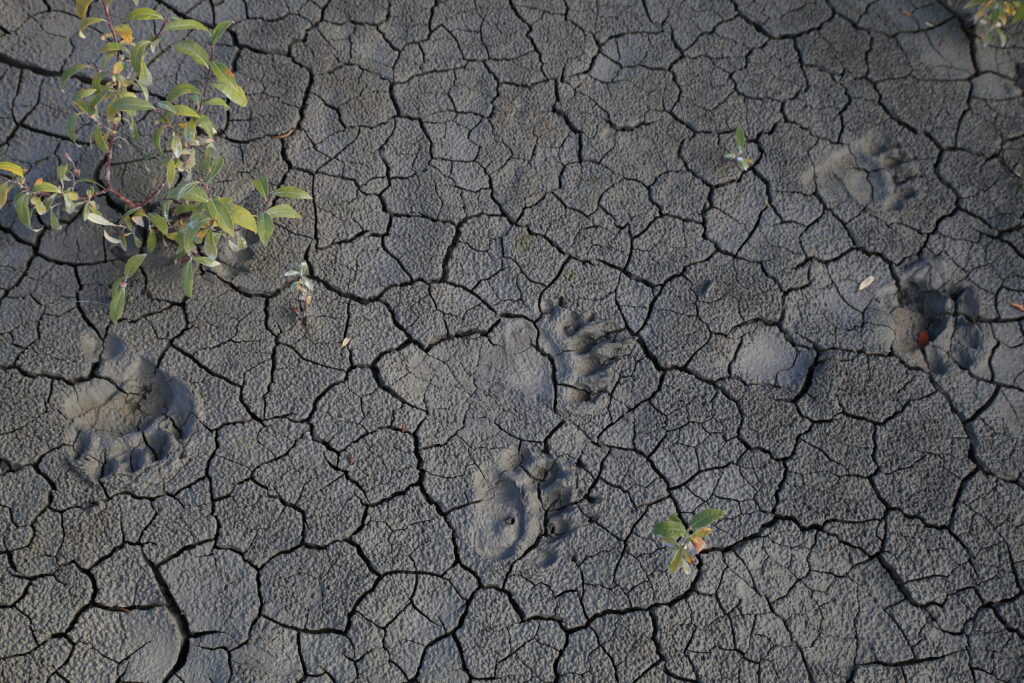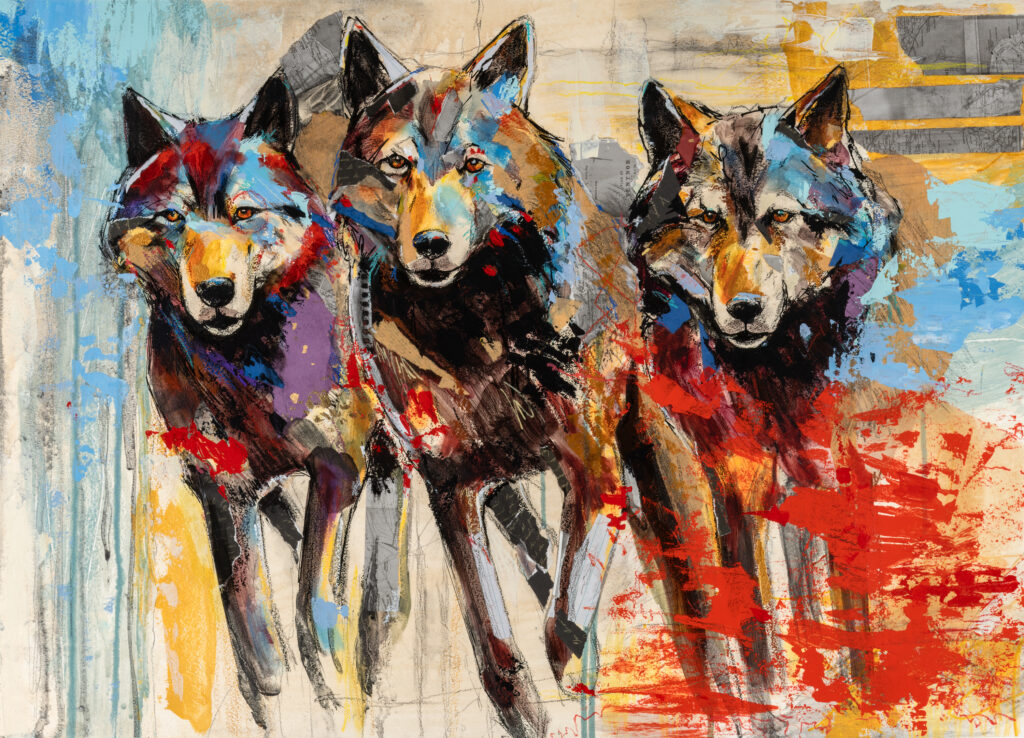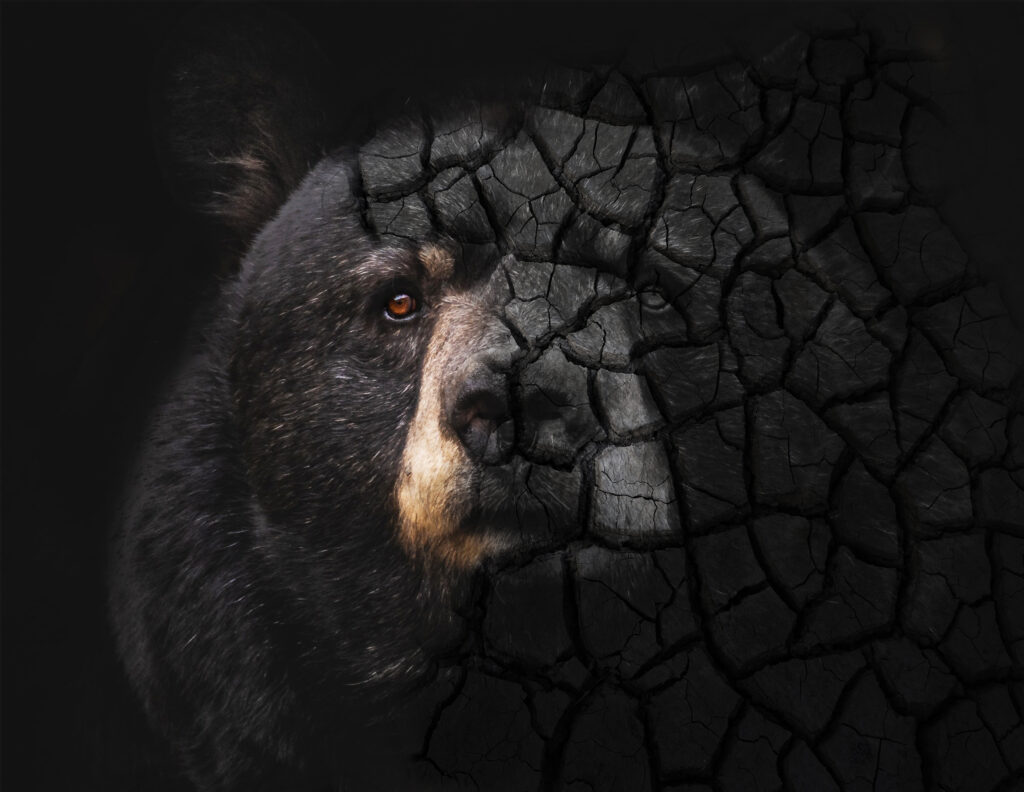
Watch a bear move through the valley and what you will see is a being who never questions whether she belongs. She reads the landscape as she goes through it, listens to the air, and adjusts to what the world tells her.
There is a stillness in the wild, not empty but full. A quiet so complete it feels as if the earth itself is listening. You sense it in that pause before dawn, when mist hangs low across the valley and your breath rises from animals you can’t quite see. It’s in the silence between wingbeats and in the sigh of a bear turning toward the wind.
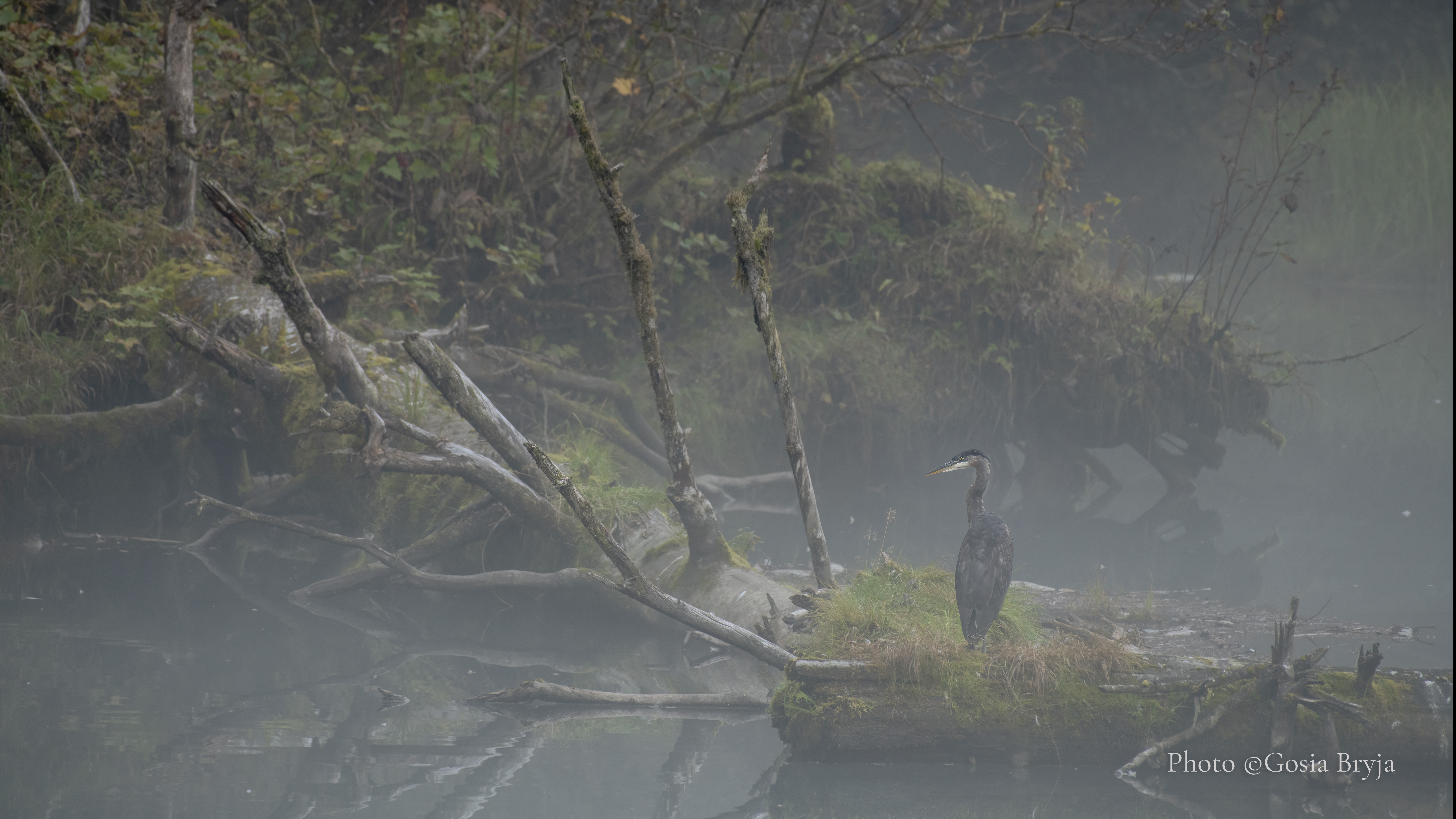
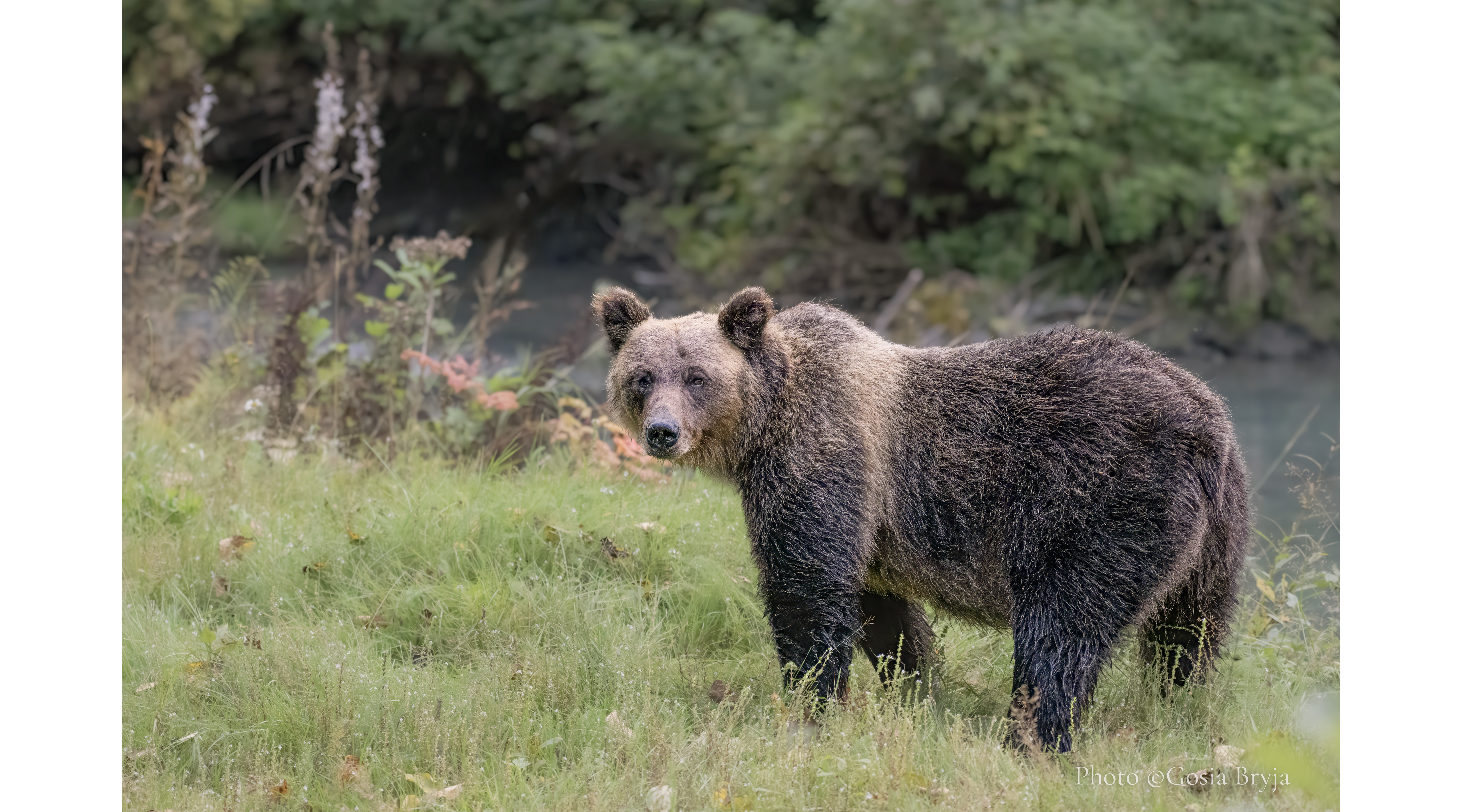
That morning, the valley was holding its breath, the heron was waiting in the mist. Two bears came quietly, as if called by the land. The mother emerged first, slow and deliberate, her movements shaped by years of knowing what the land gives and what it takes. She stopped, lifted her head, and looked toward me. In her eyes, there was no fear, only calm recognition.
For a brief moment, everything — air, light, and sound — held still between us. I stopped trying to understand and simply existed in the same space: another warm-blooded creature, breathing the same air and held by the same earth.
Life looked upon life, and in that mutual gaze, I felt not distance but invitation.
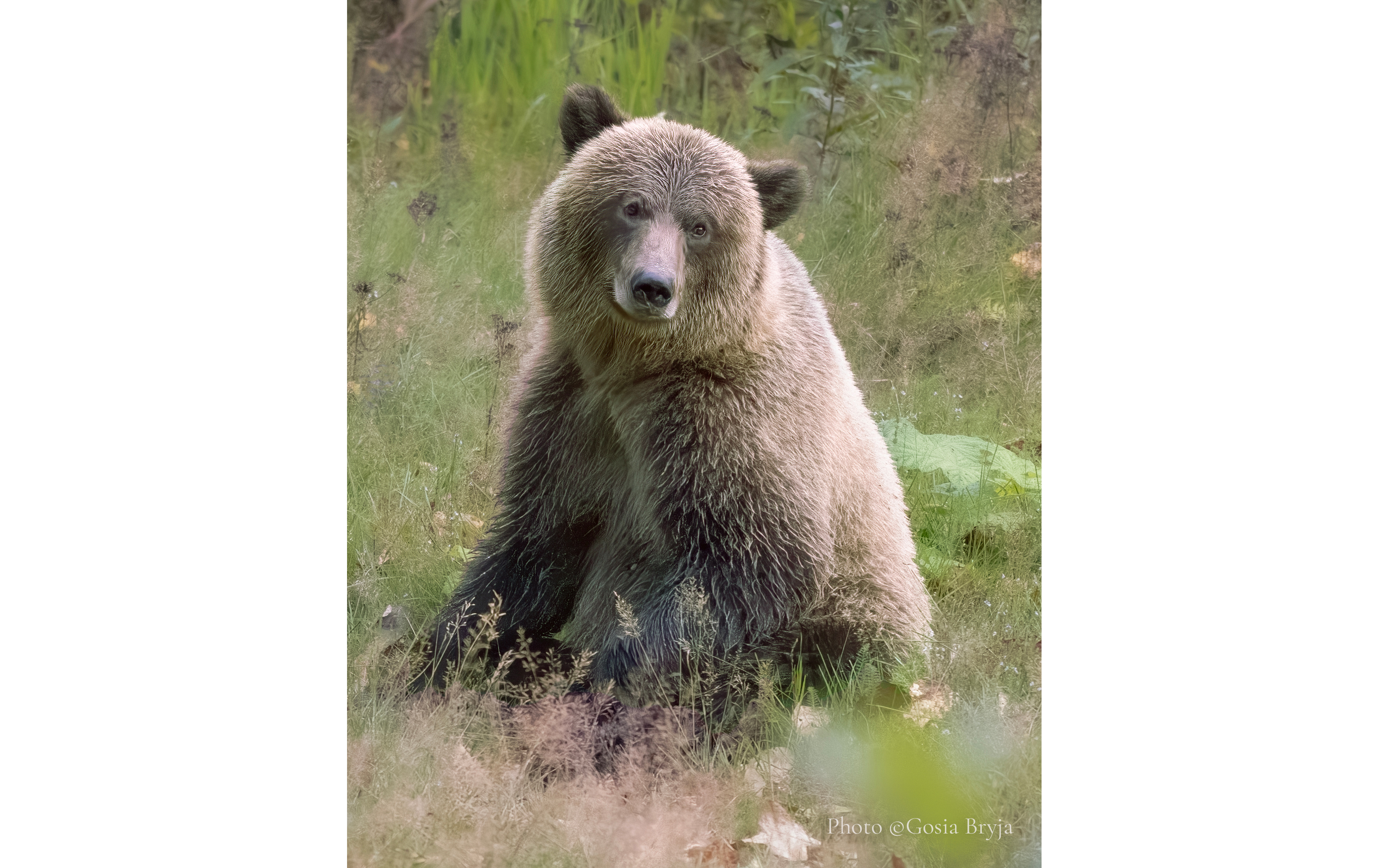
A moment later, the bear’s daughter followed, lighter in her steps and full of restless curiosity. She stumbled over a low boulder, caught herself, and then pressed her nose into a tuft of grass. She moved forward in small, testing leaps, exploring the ground and the air. Finally, next to her mother, she sat down and looked straight at me, as though following an invisible line her mother’s gaze had already drawn.
For a long while, the three of us stayed there motionless, and then the mother turned her head toward the wind. She listened. The young one followed her with eyes eager to learn. And I, a privileged witness, was beginning to understand what I could not yet name.
The mother’s trust, her willingness to let me witness her family and stay there rather than leave, was not automatic. It was a choice. She read me the way she reads everything in her world and chose to trust my presence.
Sitting in that silence, I realized how alive everything is. Every movement, every shadow, every breath was part of a language of belonging spoken not in words but in gestures, patience, and trust.
What Bears Know
There is nothing abstract about what bears understand. Their knowledge is lived, carried in muscle and memory, shaped by eternal time. They hold balance in the way they walk and reciprocity in the way they see the world.
Watch a bear move through the valley and what you will see is a being who never questions whether she belongs. She reads the landscape as she goes through it, listens to the air, and adjusts to what the world tells her. Every breath, every pause, every small tilt of the head speaks with the fluency of something long remembered and now recalled.
Bears belong simply by existing. They do not need to reconnect with nature; they are nature.
We’re the ones who forgot because we stopped listening. We lost the language, and with it, our sense of belonging. The bears have not forgotten. Effortlessly, they still carry the awareness, the presence we’re struggling to regain.
The Language They Read
Bears’ belonging is not passive. It is an ongoing, active awareness, a way of sensing the world so completely that they are never separate from it. Every sound and every scent and every shift of light partake in the process of knowing.
That morning, I began to understand what that means. The bear was not just allowing me to watch her. She was reading me.
How we enter the woods matters. Our intention is the first language we speak. It reveals itself before we move, before our eyes spot a bear.
The bears read you because they must. Their lives depend on it. They survive by reading energy in the same way they read wind, water, and the ripeness of berries. They know the scent carried by the wind as they know which streams run clean and which slopes will hold.
They read your posture, your breath, even your silence — the weight of your presence. For them, your intention feels shifting and alive, like the constantly varied weather.
When you step into their world, they know. They know whether you have come to listen or to take, to be present or to control. They know whether you carry calm or fear, whether your presence brings peace or harm.
You cannot hide intention from a being whose life depends on reading the truth of subtle things.
But there is a reward waiting for us. When you enter with reverence, with a quiet heart, something shifts. You become part of the conversation rather than an intrusion. The bear might pause near you. The ravens might call. For a moment, you are allowed to witness a realm that is invariably true.
The intention writes the story for the bears to read.
What We Have Lost
And yet, such reward is rare. Over time, our intentions have become stained with fear — fear of what is wild, of what we cannot fully understand.
From that fear grows control, the illusion of safety. We replaced belonging with ownership, trust with management, reciprocity with regulation. We built systems around that fear: management, population control, the false belief that if we do not intervene, nature will spiral out of balance.
We justified killing as conservation, violence as stewardship. But stewardship born from fear is not relationship at all. It is control disguised as a mask of care.
Hunting. Some people say hunting reconnects them to nature and that it honours the animal. It is even claimed to be a communion with nature.
But one cannot kill his way into kinship. Connection through violence is a contradiction.
When we enter the woods carrying weapons and intent on ending a sentient life — whether we call it sport, tradition, or management — we are speaking the language of separation. The very language that severed our belonging in the first place.
Reciprocity
Yet belonging can be recalled and regained. Not through control or force, but through quietude, attention, the willingness to be changed.
Barry Lopez called it “a long, dilated observation,” the act of staying in one place long enough to be changed by it. You must sit so still your own breathing becomes part of the landscape. Still enough that a raven might settle nearby. Still enough that, for a moment, you stop being a visitor and become part of the surrounding world.
Lopez spoke of more than observation. He spoke of relationship, a way of seeing that requires humility and patience. To stay still long enough to be changed is, in itself, an act of respect. It is how worthiness begins — not in what we do but in how we listen.
This takes time. It takes a willingness to be seen as much as to see, to be read and measured by beings we claim to respect.
Only then, almost without noticing, will we realize the earth was never silent. It was only waiting for us to stop doing whatever we are doing and to simply recall how to belong.
Because belonging is where trust begins, where the land learns our intentions, and the bears decide whether to stay or turn away.
In that space of mutual recognition, relationship becomes possible — no longer about control, but about being known. A quiet exchange of trust that asks for patience on both sides.
Robin Wall Kimmerer writes: “Knowing that you love the Earth changes you — it activates you to defend, to protect, to celebrate. But when you feel that the Earth loves you in return, that feeling transforms the relationship from a one-way street into a sacred bond.”
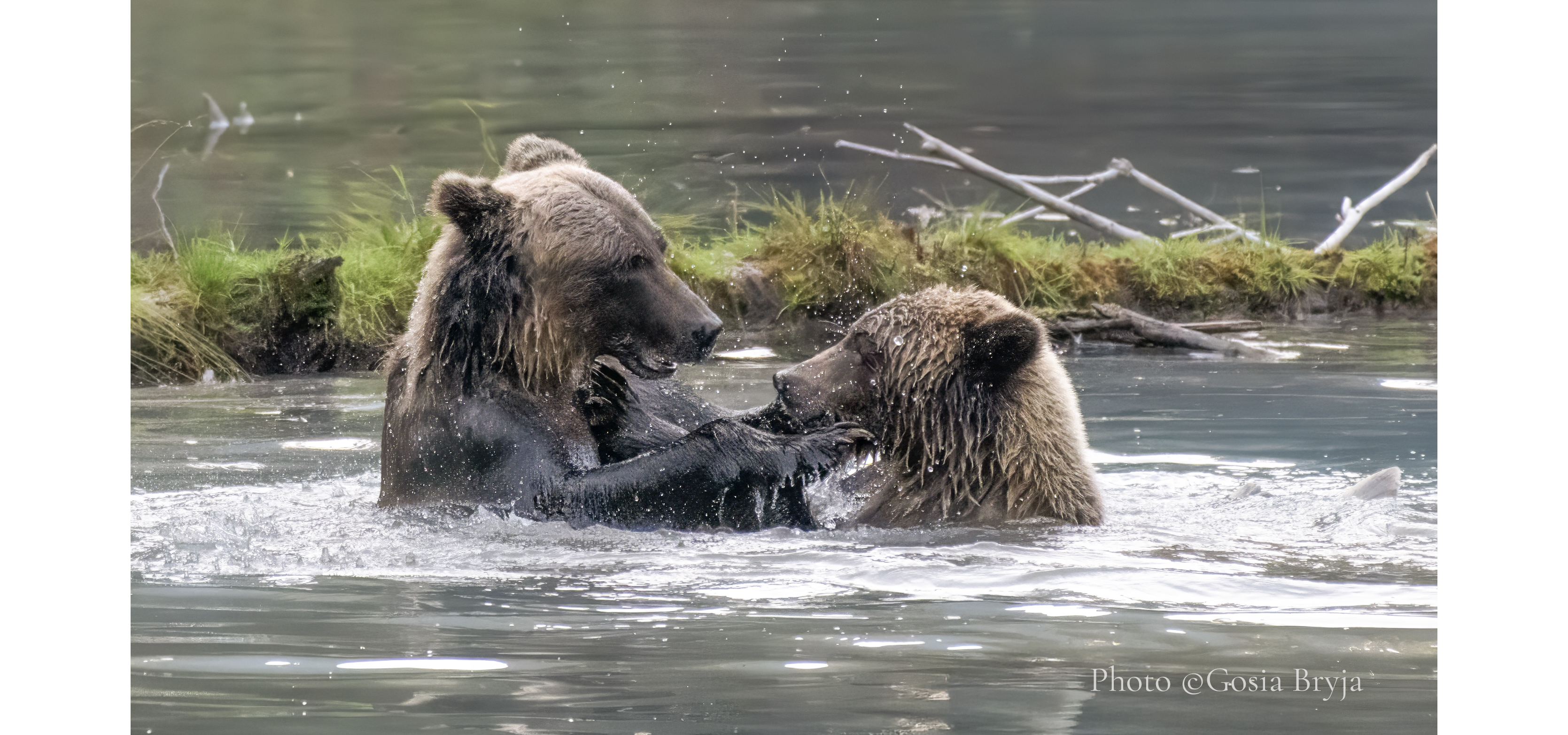
This is reciprocity. Not only us loving the wild, but the wild trusting us enough to let us in. Not only us watching the bears, but the bears allowing themselves to be seen. Not only us wanting to belong but being recognized as worthy of belonging.
Reciprocity, at its heart, is a moral act, a measure of what we choose to protect. John C. Sawhill wrote, “A society is defined not only by what it creates, but by what it refuses to destroy.”
What we choose to preserve — the rivers that still run free, the forests where cubs still learn from their mothers, the bears who ask only to live — will define not only the fate of the wild, but whether we are worthy of its trust.
What the Heart Remembers
Despite the harm we have done, the wild still holds space for us. Robin Wall Kimmerer writes, “The land knows you, even when you are lost.” The bears, patient as ever, are still willing to teach.
Perhaps what they teach reaches beyond forests and rivers and into how we live with one another. We move through a world crowded with violence: in words, in politics, in daily relations. Beneath the noise, there is a longing to belong again, to live as part of something steady and alive.
The bears know how to achieve it. Watching them, we see not only what we have lost, but what we can still become.
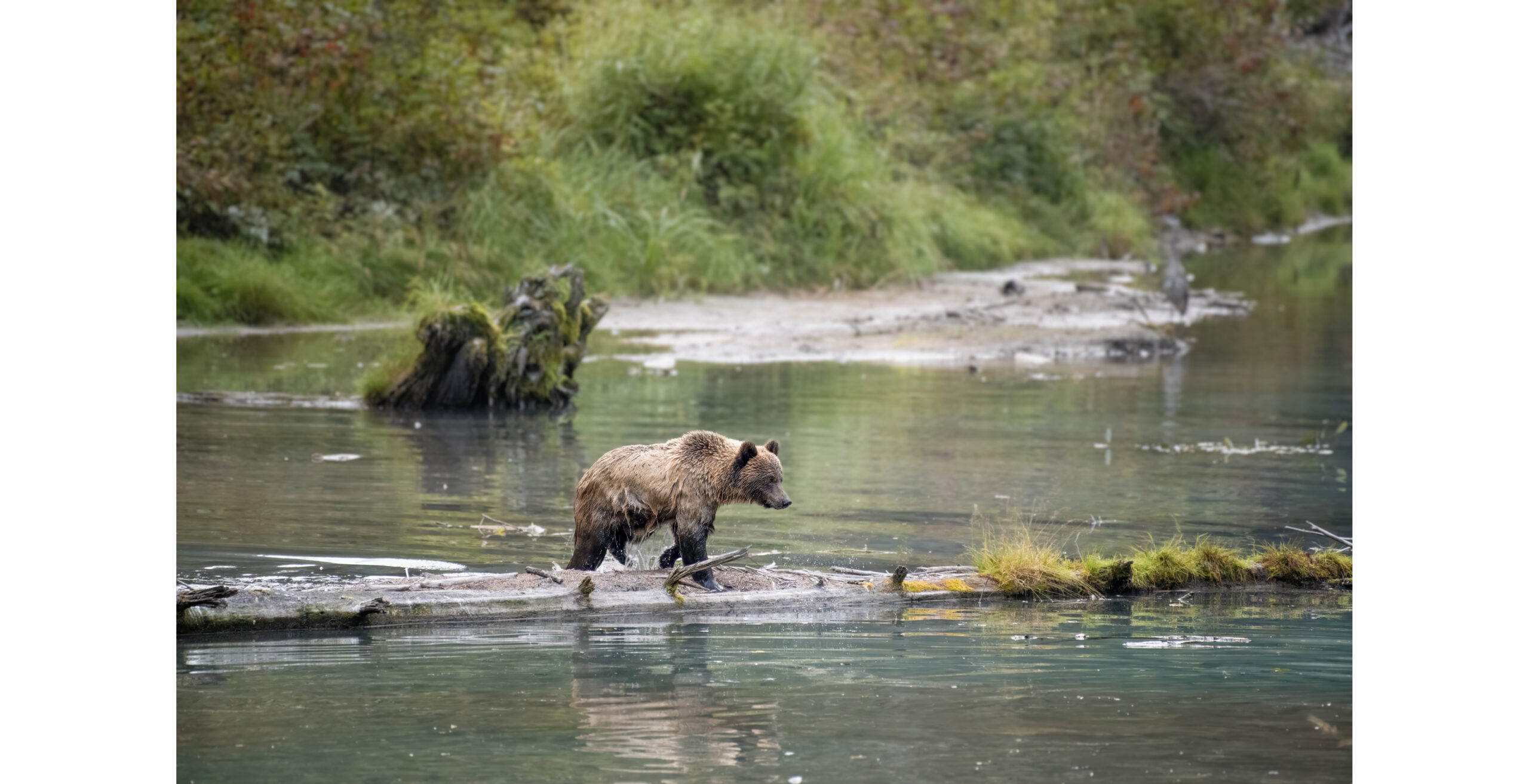
That day, when the mother bear looked at me and chose to stay, I felt that possibility, the quiet return of belonging. Across the river, a heron stood motionless, as if listening too.
The bears, they are here, speaking the language we have forgotten. But this needs not to be an irreversible loss. If we listen carefully and intently, if we are willing to be seen, they can lead us back home.